

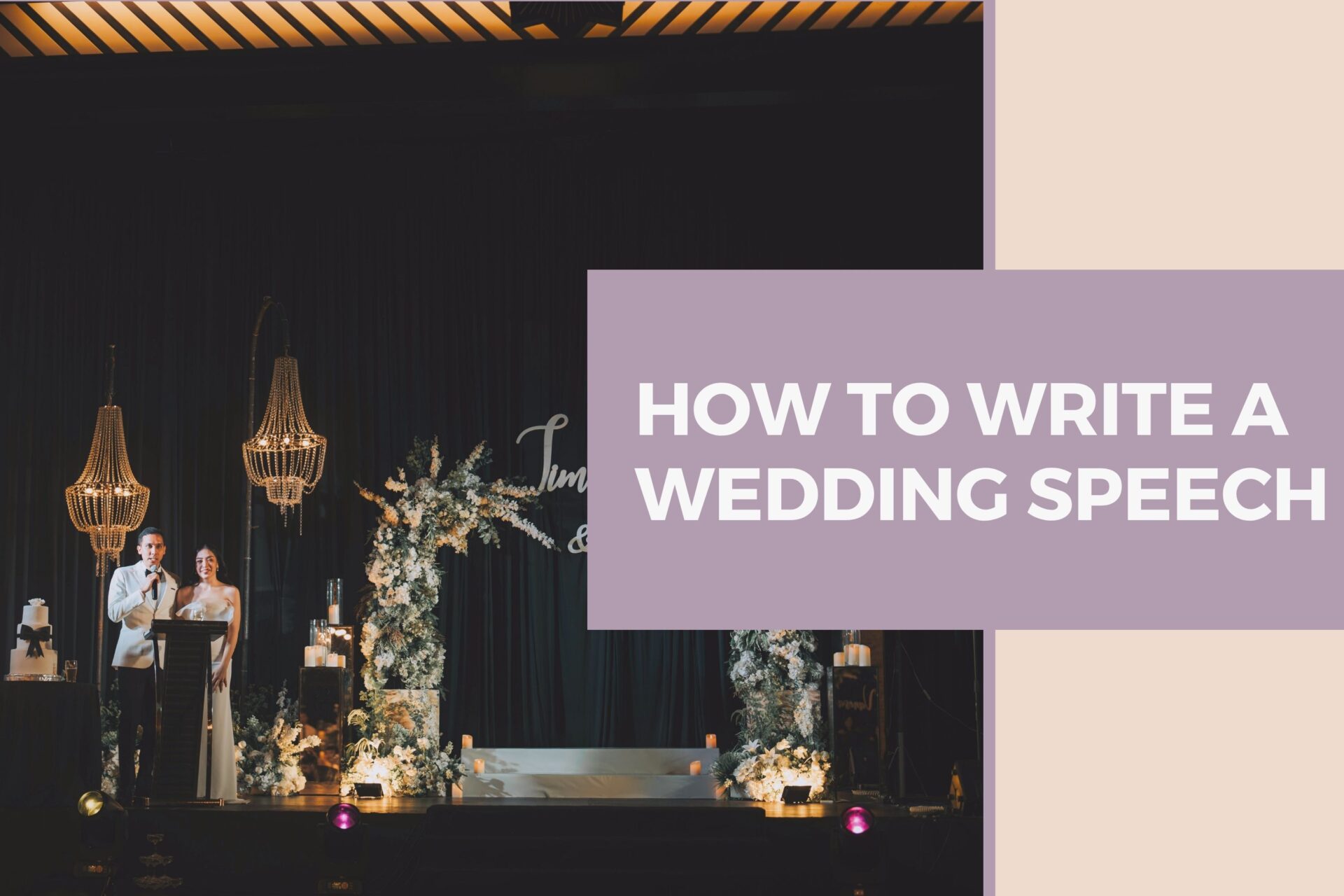
26 Mar How to Write a Wedding Speech
How to Write a Wedding Speech: Top 5 Simple Formulas That Work Every Time
If you are wondering how to write a wedding speech, the good news is this: you do not need to be naturally funny, overly confident, or great at public speaking to deliver something meaningful. The best wedding speeches are usually the simplest ones. They are honest, warm, easy to follow, and full of heart. How to write a wedding speech isn’t just about the words. It’s about the feeling those words create in the room.
I’ve photographed speeches that brought 200 guests to tears in under two minutes. I’ve also photographed speeches that made everyone quietly check their phones. The difference was never about who was the better speaker. It was always about who was willing to be real.
So if you’re staring at a blank page right now, wondering how to write a wedding speech that people will actually remember — you’re in the right place. I’m going to walk you through the five formulas I’ve seen work, time and time again, from the best seat in the house: behind the lens.
Why How to Write a Wedding Speech Matters More Than You Think
Before we dive in, let me tell you something from a photographer’s perspective.
The speech segment is one of the most emotionally loaded moments of the entire wedding day. More than the first look. More than the cake cutting. Because it’s the one moment where real, unscripted human connection happens in front of everyone — and the camera is watching every single second of it.
When the speech is good, I don’t have to chase the moments. They come to me.
The bride’s shoulders are shaking as she laughs. The groom pressed his lips together, trying not to cry. The father of the bride is looking at his daughter like she’s still five years old. These are the photographs couples frame on their walls, show their children, and carry with them for the rest of their lives.
And they all start with one thing: a speech that was written with heart.
Formula 1: Start With Heart, Not Humour
Lead with emotion. The laughs will follow.
This is the number one rule I’d give anyone learning how to write a wedding speech — and it’s the one most people get backwards.
The instinct is to open with a joke. To break the tension. To get the room on your side before you say anything meaningful. I understand the impulse — standing up in front of a crowd is terrifying. But here’s what I’ve observed from behind the camera: a sincere opening is far more powerful than a funny one.
When a speaker opens with something honest — something true — you can see the whole room physically settle. The couple’s faces soften. The guests lean forward. And that shift in energy is captured in every frame I shoot from that moment on.
You don’t need a perfect line. You just need a real one.
Try starting with:
“I’ve rewritten this speech four times because nothing feels big enough for today.”
“I’m not going to pretend I’m not emotional — because I absolutely am.”
“There are people in this room I love more than words, and today it shows.”
The Photography Truth: A genuine emotional response in the first 30 seconds of a speech is worth more than ten posed portraits. When the couple is visibly moved before the first story is even told, I know the rest of the images are going to be extraordinary.
Formula 2: Tell One Great Story — Not a Timeline
Pick one moment. Build everything around it.
If you only take one thing away from this guide on how to write a wedding speech, let it be this: stop trying to cover everything.
I’ve sat through speeches that were essentially a biography. Born in KL, went to school here, got a job there, met the couple in such and such year. Technically thorough. Photographically lifeless. Because there’s no feeling in a timeline — only facts.
The speeches that move people are built around a single, specific, vivid story. Not a highlight reel. Just one moment that captures exactly who this person is and why they are so deeply loved.
Maybe it’s the time he drove back two hours just to pick up her forgotten jacket. Maybe it’s how she still calls her mum every single morning without fail. Maybe it’s the tiny, ridiculous argument they had over where to hang a painting that somehow made you realise they were meant for each other.
Whatever it is — one great story does more in two minutes than a ten-minute history ever could.
From behind the lens, a well-told story creates a ripple effect of reactions across the room. The couple starts laughing, then one of them tears up, then they reach for each other’s hand without even realising it. The parents nod knowingly. The friends exchange glances. Every single one of those reactions is a photograph.
Before you write anything, ask yourself: “What one moment best captures who they really are?” Start there. That is your speech.
Formula 3: Add One Real, Relatable Laugh — Keep It Funny, Not Embarrassing
Relatable truth = warm laughter. Embarrassing = uncomfortable silence.
Let me be upfront about something: I’ve photographed speeches where cheap jokes landed badly. I’ve watched a bride’s smile tighten as a story got more uncomfortable with every sentence. And those are not the photographs anyone wants to look back on.
But a real laugh — the kind that comes from something everyone in the room immediately recognises as true? That is pure, photographic gold.
Maybe she’s always late to everything except the things that matter. Maybe he still can’t load a dishwasher after three years of being together. Maybe they spent six months arguing over paint colours and somehow came out stronger for it. These small, human truths make the couple feel seen, not mocked — and the laughter they produce is warm, inclusive, and completely contagious.
The golden rule: If you’re unsure whether something crosses the line from funny to embarrassing — it crosses the line. Leave it out.
The Photography Magic of Real Laughter: When a whole room laughs together — openly, genuinely — faces soften, guards come down, and the couple almost always turns to each other in that split second of shared joy. As a photographer, I live for that turn. It’s instinctive, completely unposed, and absolutely beautiful in a frame.
Formula 4: Be Human — Vulnerability Is Your Superpower
Honesty connects. Perfection disconnects.
The most powerful speech I ever photographed wasn’t delivered by the wittiest best man or the most polished maid of honour. It was a father who stood up, looked at his daughter in her wedding gown, and couldn’t speak for a full ten seconds.
The room was completely still. My shutter was firing. My hands were shaking.
That silence, that raw, unguarded humanity — it created the most beautiful photographs of the entire wedding day.
Here’s what I want every speech-giver to understand: nobody in that room is expecting perfection. They’re not there to critique your delivery or your vocabulary. They’re there because they love the same people you love — and all they want is to feel something real.
Dads — if your voice breaks, let it break. Every parent in that room will feel it too.
Grooms — if you’re nervous, say so. It’s endearing, not embarrassing.
Best friends — if this friendship changed your life, say that out loud.
A little wobble. A pause to gather yourself. These are not mistakes — these are the moments that make everyone in the room lean in, and they create the kinds of photographs that stop people mid-scroll every single time.
Reminder from behind the lens: Your couples will look at these images for the rest of their lives. The photos they’ll love most — the ones they’ll show their children and grandchildren — are the ones where everyone looks completely, beautifully, honestly human.
Formula 5: End With Energy — Lift the Room Into the Toast
Don’t trail off. Build up. Send the room soaring.
Here’s something I’ve noticed across hundreds of weddings: speeches that quietly fade away are almost impossible to photograph well. The energy drops, guests look uncertain, and the couple smiles through polite applause that feels more like relief than celebration.
But a speech that builds — that gathers momentum and ends in a strong, joyful, inclusive toast? The entire room rises with it. And that is a photograph.
A great closing doesn’t need to be poetic or clever. It just needs to be warm, clear, and celebratory — an open invitation for everyone in the room to join the moment together.
Try something like:
“So please — everyone — raise your glasses. To love that is patient, to family that shows up, and to these two incredible people and the beautiful life they’re just beginning together. Cheers!”
The Photography Payoff: The toast moment — glasses raised, faces glowing, the couple beaming at each other — is one of the most visually dynamic images of the entire reception. When the energy is high and the toast feels like a celebration rather than a conclusion, these images practically make themselves. Wide shots, close-ups, the couple’s reaction — everything works when the room is alive.
Don’t trail off. Lift the room. End with joy.
The 60-Second Formula: For Couples Who Hate Public Speaking
Still feeling stuck on how to write a wedding speech when you’re the couple yourselves? Here’s the simplest, most practical framework I share with every pair of clients who tells me public speaking terrifies them:
| Step | What to Say | Why It Works |
|---|---|---|
| 01 — Open With Gratitude | Thank everyone for being there | Warms the room immediately |
| 02 — Thank Your VIPs | Parents, bridal party, key helpers | Triggers genuine emotional reactions from those named |
| 03 — Tell One Short Story | A heartfelt anecdote about your partner | The most memorable moment of the entire speech |
| 04 — Appreciate Your Guests | Especially those who travelled far | Sweeps the room with warmth — great for wide reception shots |
| 05 — Close With Heart | Toast to love, family, and the future | Ends on a high with the whole room engaged and smiling |
Keep it under 90 seconds. That’s genuinely all you need.
✅ Say This — Not That
| ✅ Do Say | ❌ Don’t Say |
|---|---|
| “Thank you for being here to celebrate this special day with us.” | “Hi… can everyone hear me? I didn’t really prepare anything.” |
| “To our parents — thank you for supporting us every step of the way.” | “Thanks to our parents… yeah. This is embarrassing.” |
| “One of the things I admire most about her is how deeply she cares for the people around her.” | “Let me tell you about the time she fell down in front of everyone…” |
| “We know many of you took time out of your busy lives to be here, and it truly means the world to us.” | “Thanks everyone for coming.” |
Final Thoughts
After all these years of photographing weddings, I can tell you this with complete certainty:
Knowing how to write a wedding speech isn’t about being the funniest or the most eloquent. It’s about being the most honest.
The speeches I remember — the ones that still give me chills when I look back at the images — were never the longest or the most rehearsed. They were the ones where the speaker forgot, just for a moment, that there was a room full of people watching. And simply talked to the two people standing in front of them.
Those are the speeches that make guests laugh and cry in the same breath. Those are the speeches that make the couple hold each other a little tighter. And those are the speeches that create photographs your family will treasure for generations.
Short. Real. Memorable.
That’s how to write a wedding speech that truly works — every single time.
Found this helpful? Share it with your best man, your maid of honour, or anyone in your life who has a speech coming up. They’ll thank you for it.
Check out our Instagram & Facebook Page for more photos.
Contact us if you need further information.